
· by Michael Blair, Nashville's Mover
A moving crew is priced by the hour or by the job, and either way the house they walk into decides how the day goes. On a local move across Middle Tennessee the clock runs from the moment the crew arrives, so open boxes, a fridge still full, a truck with nowhere to park and a family hunting for the kettle at nine at night all cost something. Every one of them can be sorted in the final week. This is the list we would give a friend, in the order it needs doing.
What needs confirming a week before the movers come?
Confirm the booking in writing: the date, the arrival window, the addresses at both ends and exactly which services are in the price. On an interstate move, the federal consumer booklet Your Rights and Responsibilities When You Move requires the mover to prepare a written estimate and an order for service, and it counts packing, appliance servicing and unpacking as extra services you request. Ask which of those you are paying for, so nobody finds out on the morning.
Set up utilities at both houses, and make sure the power is on at the new one before the fridge gets there. If either house is on Metro Water, Metro Water Services’ transfer page lists a $35 fee for guaranteed same-day transfer or $25 for a later day, and it asks customers stopping service to call the day before it is to be shut off. Check the fee when you call, since a city page can change.
Then think about where the truck will stop. We want it as close to the door as the street allows at both ends, because every trip from a truck parked down the block is another few minutes on the bill. Metro’s parking permit page lists residential, valet, loading zone and downtown service permits, and none of them is written for a moving truck, so in the tighter Nashville neighborhoods the practical step is asking neighbors to keep the curb clear that morning. If your street is narrow, tell us when you book and we will plan around it.
Three days out
Finish packing everything except what you will use in the last two days. Tape every box shut, write the room it is going to on the side where it can be read in a stack, and keep the tops flat so they stack square. Sealed, labeled boxes go onto a dolly and up a ramp quickly; loose items and half-open cartons get carried one at a time.
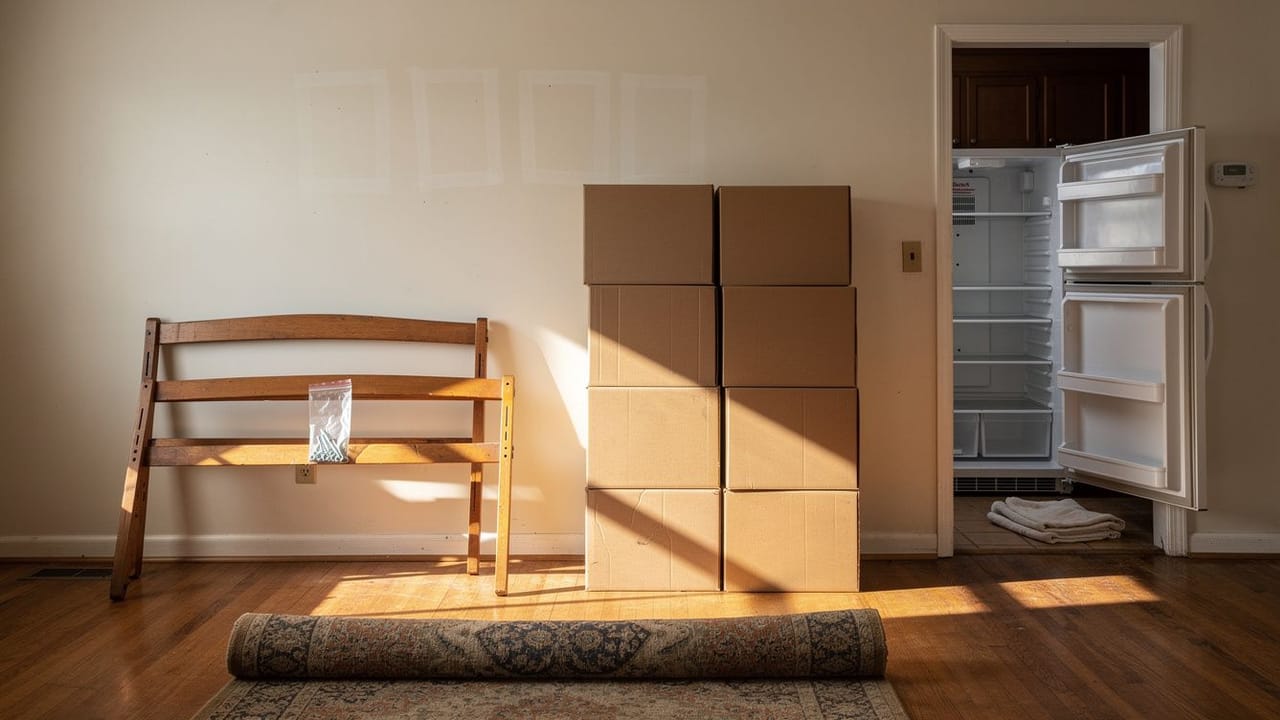
Start on the kitchen appliances. Whirlpool’s instructions for moving its refrigerators say to turn the ice maker off two to three days ahead, use up or remove all the food so the fridge is empty, then unplug it and let the freezer defrost fully with the doors open, towels down for the water. Whatever you are still eating can go in a cooler. If it is another brand, its manual has its own version of this.
Unhook the washer next. Whirlpool’s guide to moving a front-load washer starts with shutting the supply valves, disconnecting it from water and power, and catching what drains from the hoses in a bucket. It also says new shipping bolts have to go back in before the drum travels, and come out again at the new house or the machine will not run. Our post on getting appliances ready goes through the dryer, the gas lines and the rest. Coil and drain the garden hose while you are outside.
Take apart anything you agreed to take apart, beds especially, and tape the hardware in a labeled bag to the frame it came from. Take down curtains, any blinds that are going with you and everything mounted on the walls that is coming along.
- Everything packed, sealed and labeled by room
- Fridge and freezer empty, unplugged and defrosted
- Beds and furniture that need it disassembled, hardware bagged
- Wall-mounted items down, cables labeled
What should you do the night before the move?
Pack the first-night box and keep it with you, off the truck: kettle or coffee maker, mugs, toilet paper, towels, phone chargers, medications, a change of clothes, basic tools, bedding for the first night and pet food. Documents, valuables and keys stay with you too. On an interstate move the federal booklet says you may not ship hazardous materials in your boxes without telling the mover, and it names nail polish remover, paint thinners, lighter fluid and propane cylinders among them; what movers will not put on the truck covers the rest of that list.
Walk the house and clear the paths. Roll up loose rugs, move boxes off the stairs and out of the hallways, and pick up anything low that someone carrying a sofa cannot see over. Then put a note on every piece that is staying. The same booklet says the mover must prepare an inventory of your shipment before or at the time of loading, and a dresser that was never meant to go is much easier to keep off that list than to get back.
What should you do on the morning of the move?
Be there before the crew, with children and pets somewhere else. Walk the lead mover through the house, point out anything fragile, heavy or awkward, and show them what is staying. On an interstate move, the booklet asks you to make sure before you sign the inventory that it lists every item and that the condition written beside each one is right, and you can only do that if you are in the room. Keep the first-night box and the documents in your own car.
Cold water for the crew is a kind thing to offer, and in July it is welcome. It is a courtesy, though: OSHA’s heat guidance puts providing cool water on the employer, which on moving day is the moving company. Moving in a Middle Tennessee summer has more on planning around the heat.
At the destination, get there first and decide where the large furniture goes before it comes off the truck. A sofa set down in the wrong room has to be carried again, and on an hourly move the second carry is on the clock. Check the inventory as the truck empties and write any damage on the paperwork before you sign. You can still file a claim afterward (the federal booklet allows nine months on an interstate move), but it also says your ability to dispute lost or damaged items may depend on the notes you made at delivery. If you would like the date, the services and the price set down in writing before any of this starts, ask us for a free written estimate.
Sources
- FMCSA, Your Rights and Responsibilities When You Move (49 CFR Part 375, Appendix A, 2013 edition, U.S. GPO) — Interstate moves: written estimate and order for service; packing, appliance servicing and unpacking as requested extra services; hazardous materials not to be shipped without telling the mover; inventory at or before loading and checking it before signing; notations at delivery and the nine-month claim period
- Metro Water Services, Request, Transfer or Terminate Service — $35 same-day or $25 later-day transfer fee; call the day before service is to be discontinued
- Metro Nashville Department of Transportation, Apply for a Parking Permit — The permit types Metro lists: residential, downtown residential, valet, loading zone, downtown temporary service business and green; none for a moving truck
- Whirlpool Product Help, Preparing for Vacation or Moving (refrigerators) — Ice maker off two to three days before; empty the fridge; unplug and defrost fully with the doors open; towels for the water
- Whirlpool Product Help, Moving a Front Load Washer — Shut the valves, disconnect water and power, drain the hoses into a bucket; reinstall shipping bolts for transport and remove them before running
- OSHA, Water. Rest. Shade. — Employers should provide cool water for workers in the heat
FAQ
What to Do the Week Before the Movers Arrive — questions
What should I have ready before the movers arrive?
Every box sealed and labeled by room, furniture that needs disassembling already apart, the fridge and freezer empty, unplugged and defrosted, the washer unhooked, clear paths through the house, a plan for where the truck will park, and a first-night box that travels with you rather than on the truck.
Do movers disassemble beds and furniture?
It depends on the company and on what you booked, so confirm it in writing when you book rather than assuming it. If it is not included, or if you want to save crew time, do it the day before and tape the bagged hardware to the frame. Do not leave it for the morning.
What goes in a first-night box?
What you need to get through the first evening and morning without opening anything else: coffee or kettle, mugs, toilet paper, towels, chargers, medications, a change of clothes, bedding, basic tools and pet supplies. Keep it in your own car with the documents and valuables.
What happens on moving day?
The crew arrives, you walk the lead mover through the house and point out what is fragile, heavy or staying, and the goods are loaded; on an interstate move you check the inventory before signing it. At the new house you direct the furniture and note any damage on the paperwork before you sign.